 Farm Claratal
Birds, game and a very dark sky.
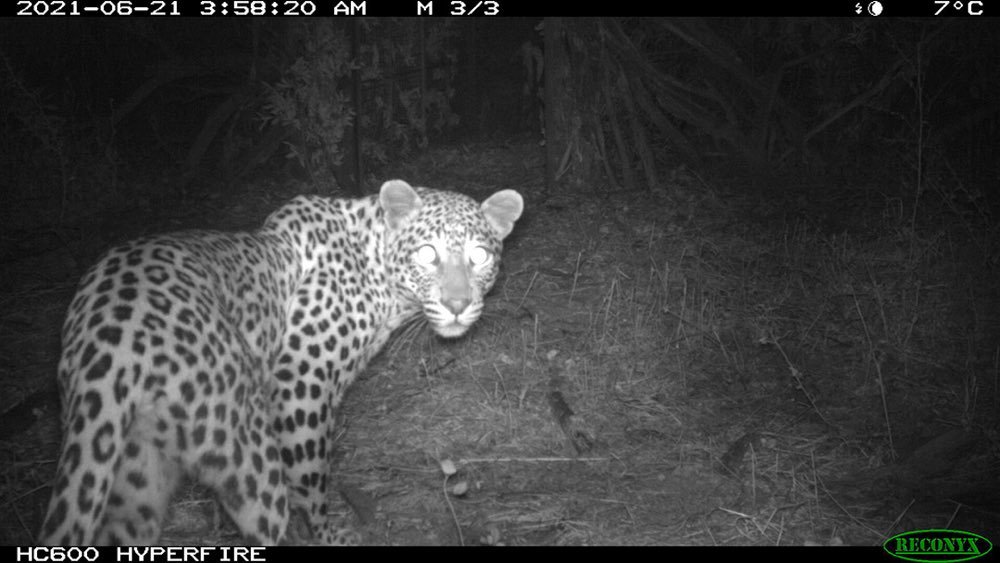
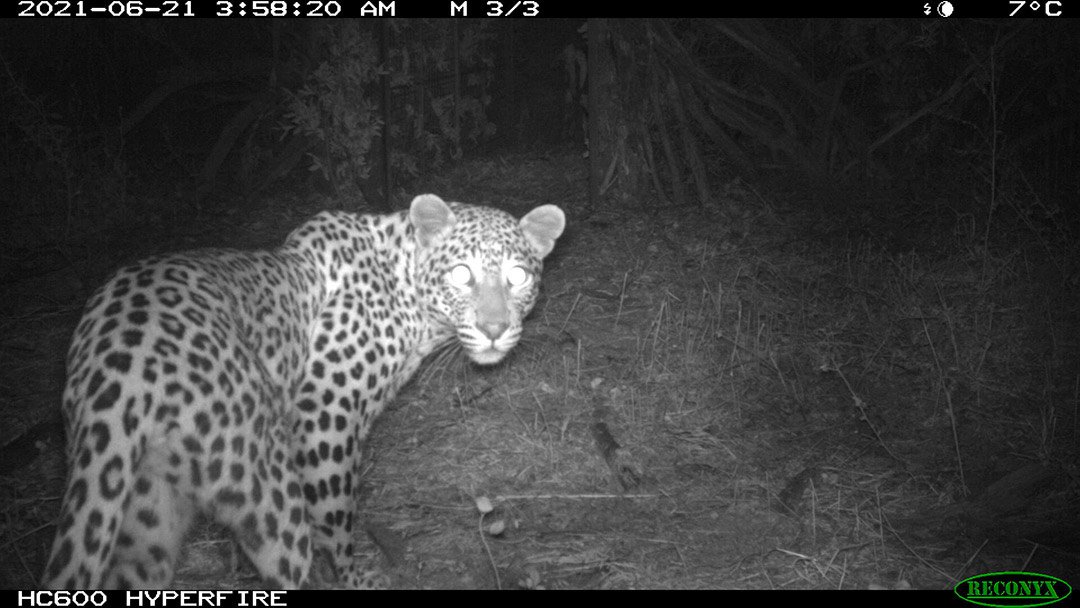
More than 170 bird species have been recorded on the farm, leopards walk past the camera traps, and at night there is no light for kilometres.
More than 170 bird species have been recorded on the farm, leopards walk past the camera traps, and at night there is no light for kilometres.
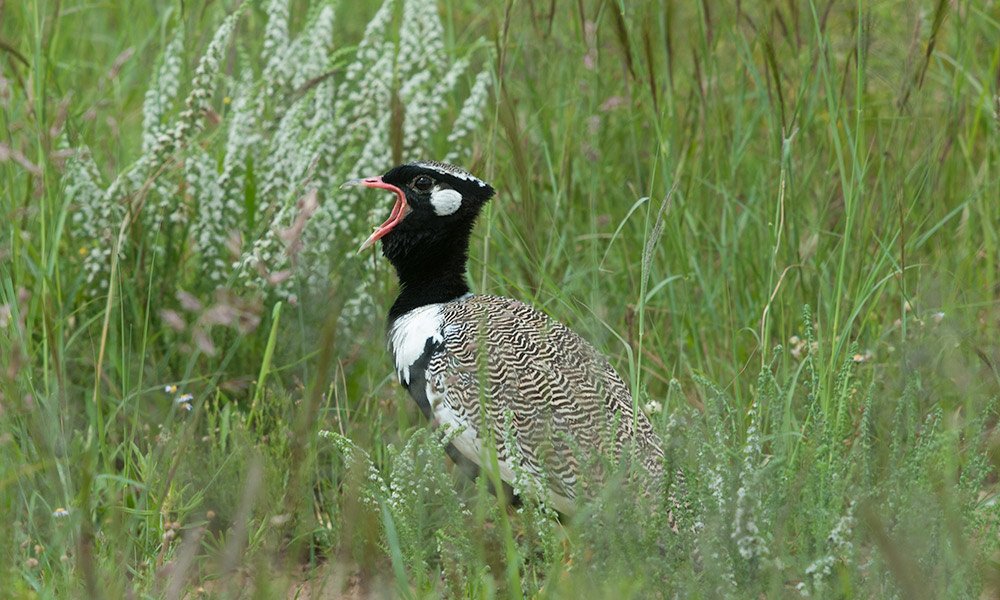
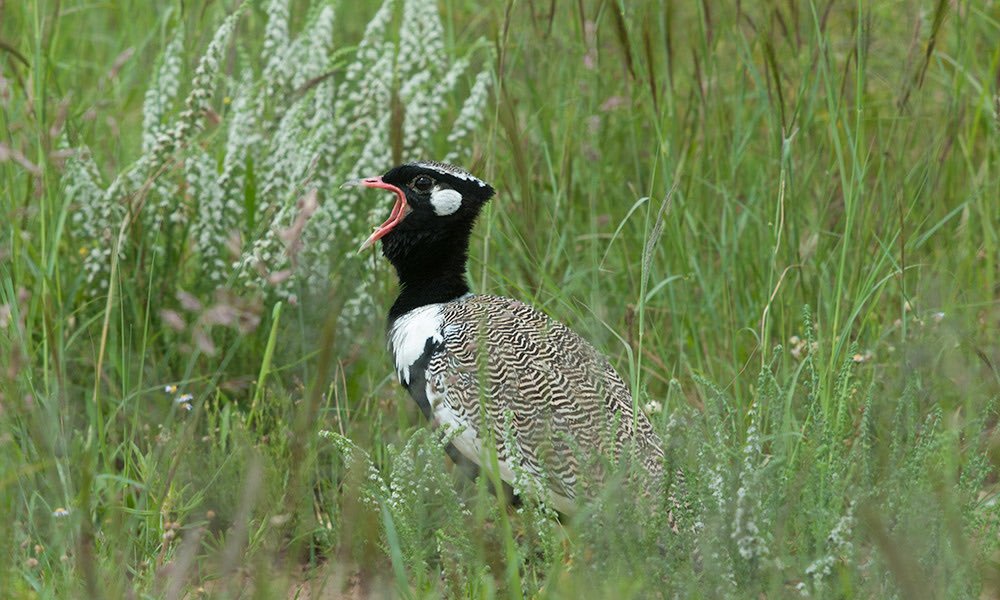
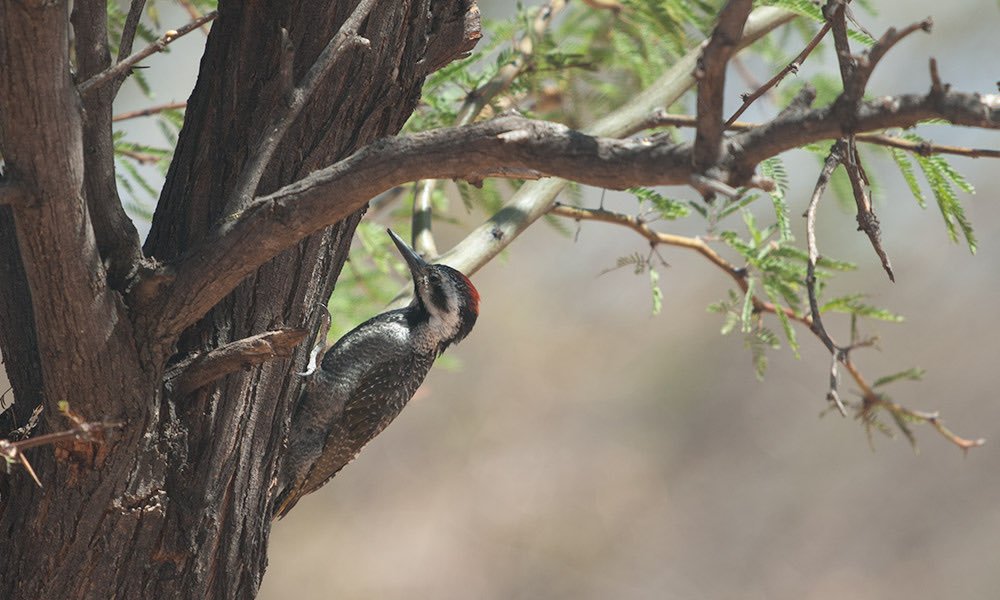
Claratal has many different habitats close together: dams, a riverbed, thorn savannah and mountain. That brings a wide range of birds, several of them found only in Namibia and its neighbours.
Birds are a good sign of healthy land. A rich bird life tells us the farm is being managed in a way that keeps its biodiversity.
Binoculars are enough to start. A spotting scope, a tripod and a long lens help. Bring a field guide, a hat and a water bottle.
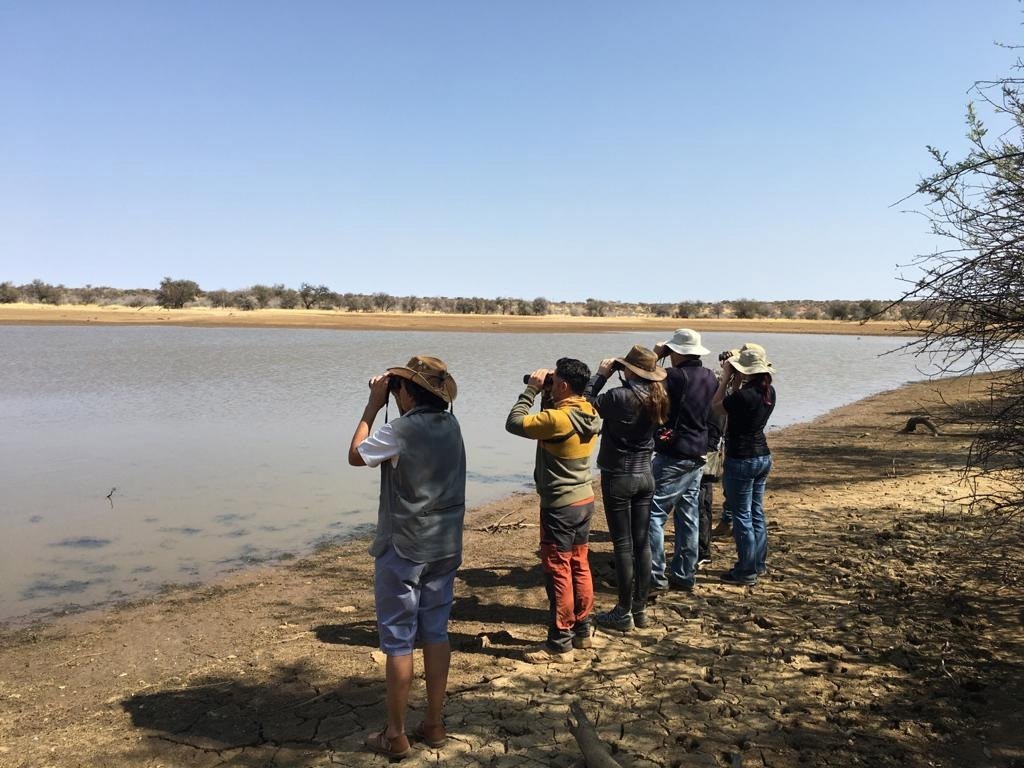
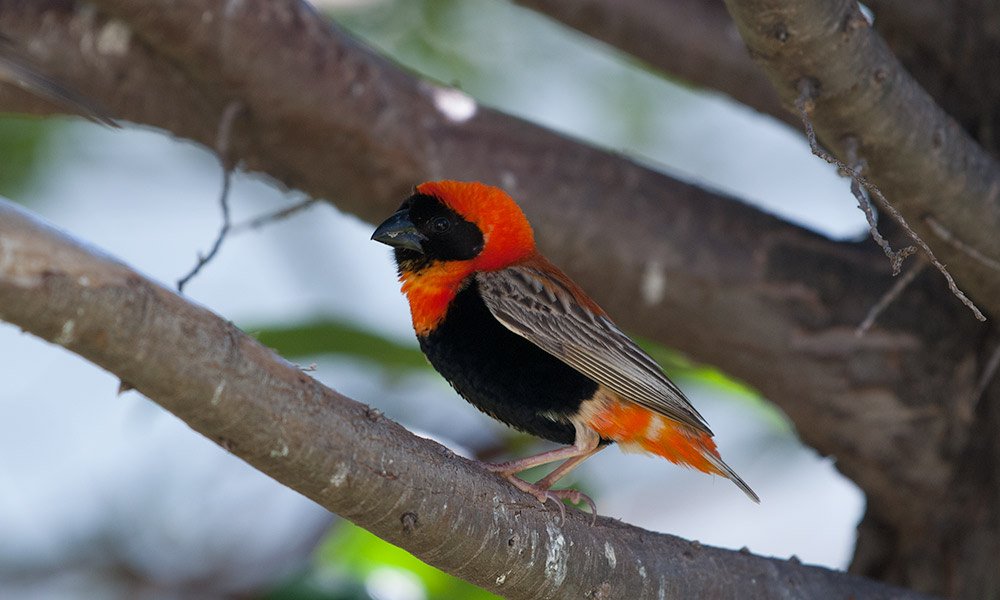
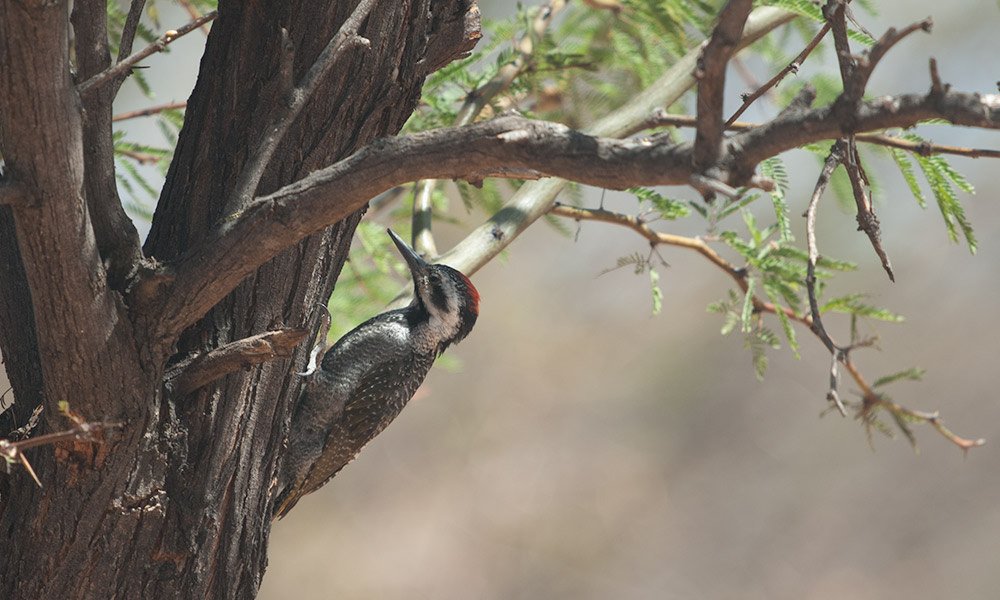
Rubén has recorded 170 species so far. If you see one that is missing, tell us and we will add it. Download the list as a spreadsheet
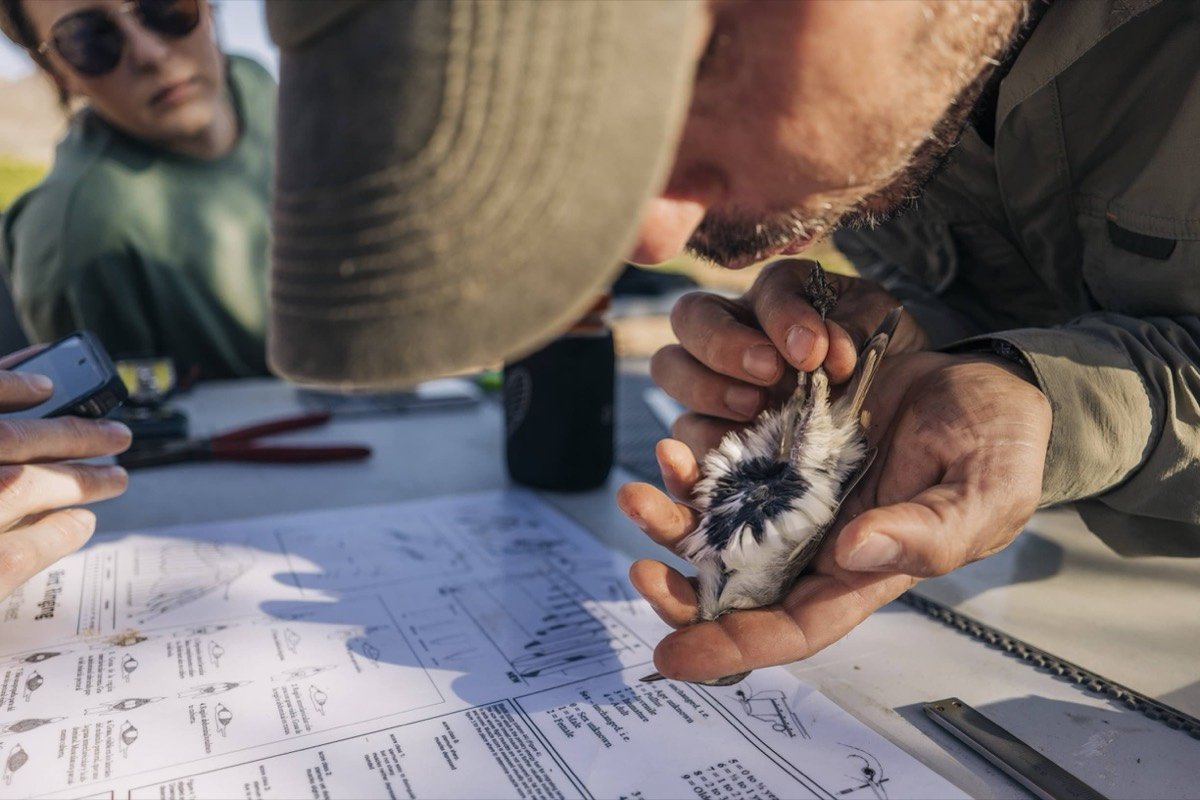
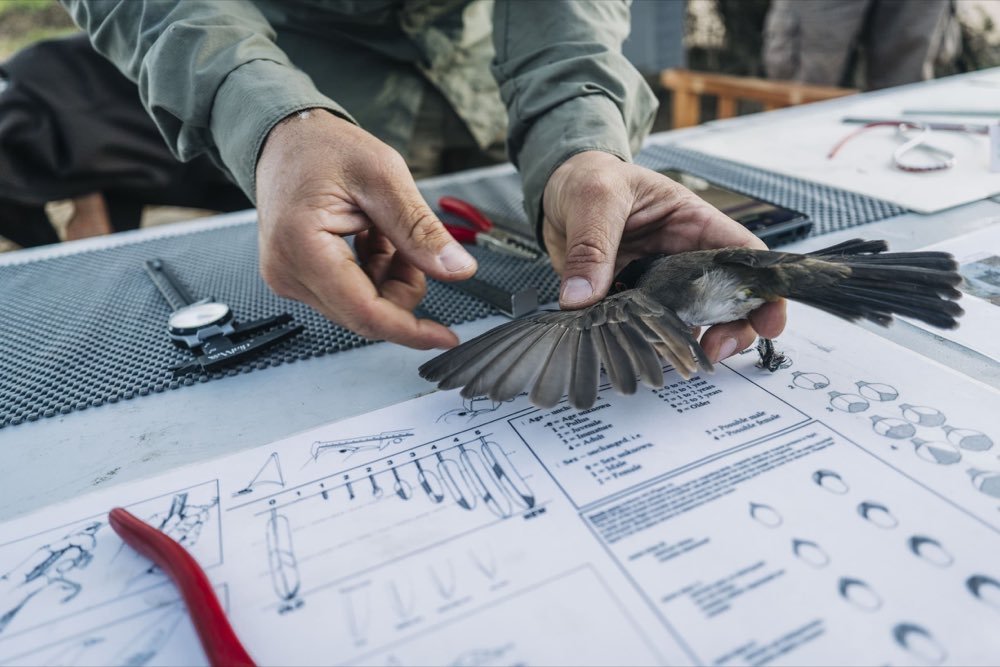
Ringing means catching a wild bird, fitting a numbered metal ring and releasing it. The ringer also records species, age, sex, measurements, weight and breeding condition.
When a ringed bird is caught again, we learn about migration routes, survival and territory. A station that rings regularly can follow the health of the whole bird population over years.
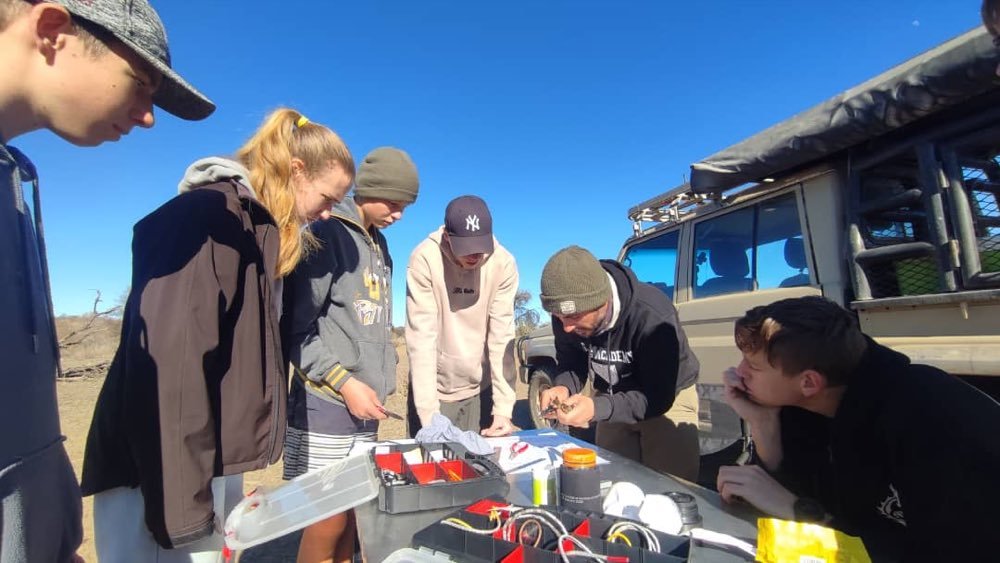
Claratal supports this research and regular ringing sessions take place on the farm. Contact us if you would like to take part.
Since April 2021 Claratal and the Auas Oanob Conservancy have hosted a research project on big cats.
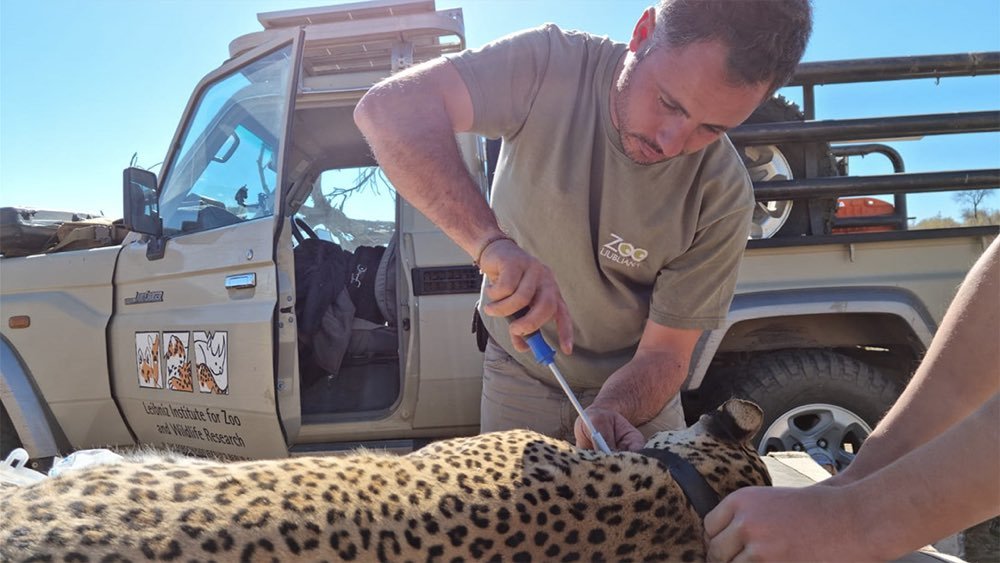
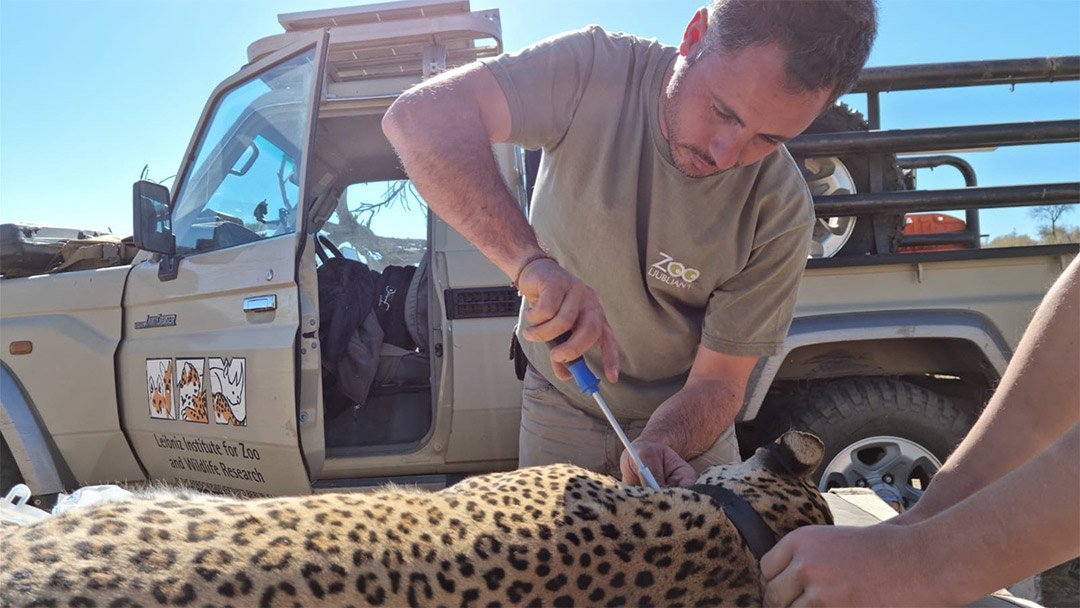
The project is run by the Carnivore Ecology Lab at the University of Ljubljana and the Cheetah Research Project of the Leibniz Institute for Zoo and Wildlife Research in Berlin. It studies how leopards and cheetahs avoid or seek each other.
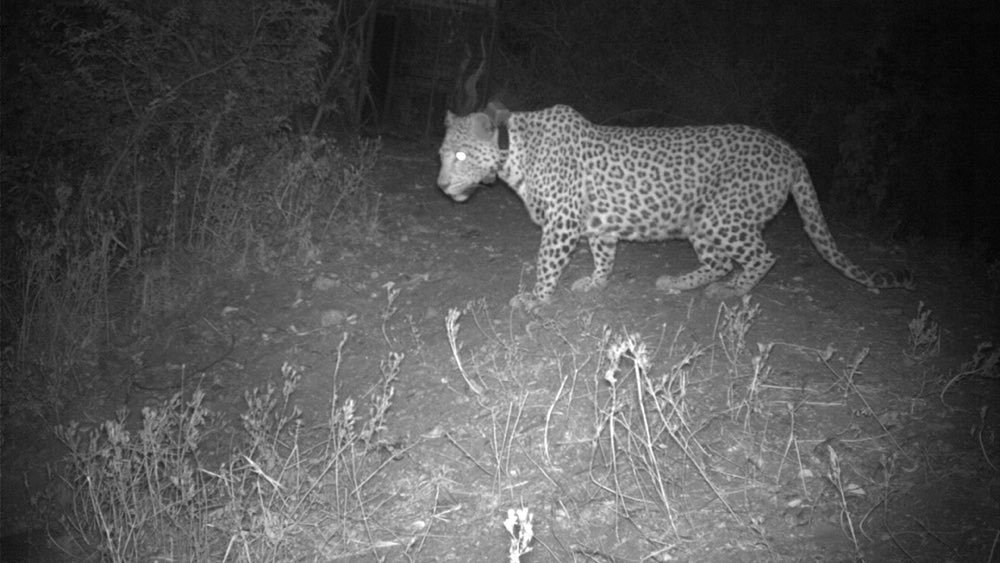
Researcher Rubén Portas is based on the farm. He fits leopards with GPS collars to follow their movements, find the places they scent-mark and find where they make their kills.
Guests may be able to join Rubén in the field, checking kill sites or servicing camera traps and box traps. Ask us when you book.
Visit the InterMuc project site
The institute supports farmers in conflict between people and wildlife. Its scientists track large carnivores with satellite collars and analyse cheetah hair to learn what the animals have been eating.
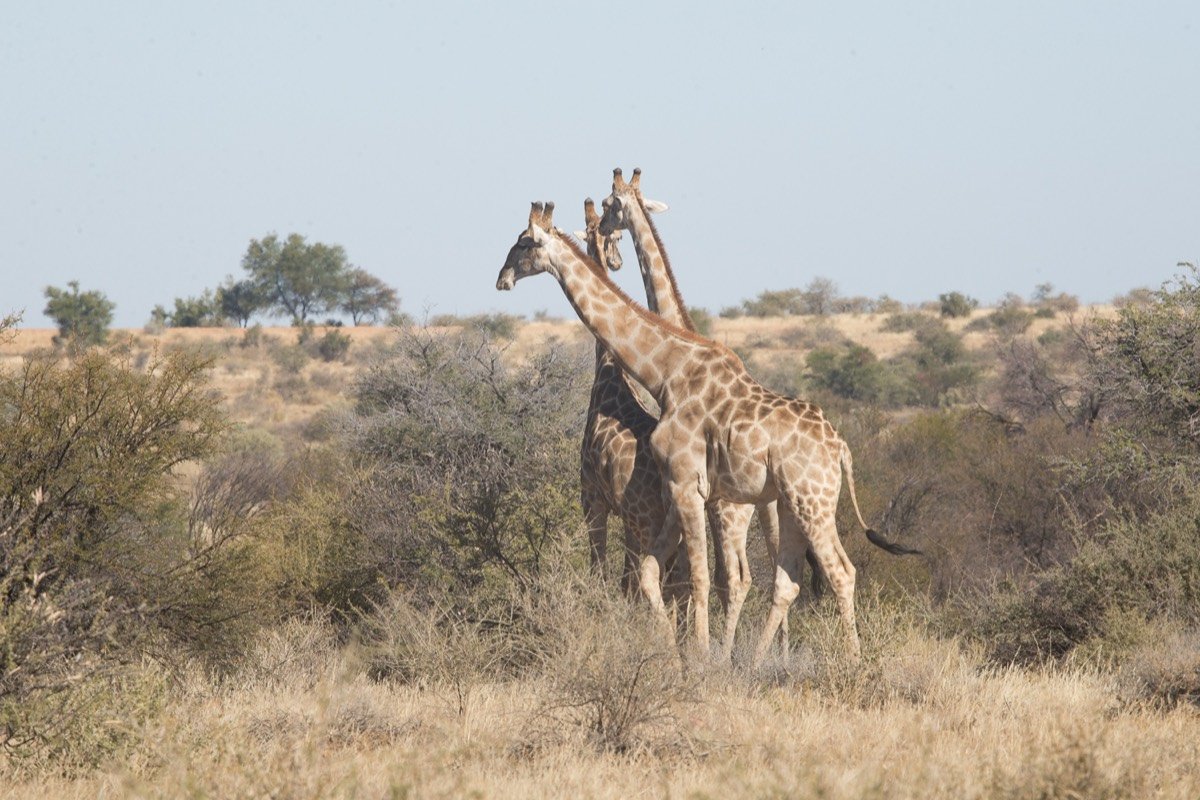
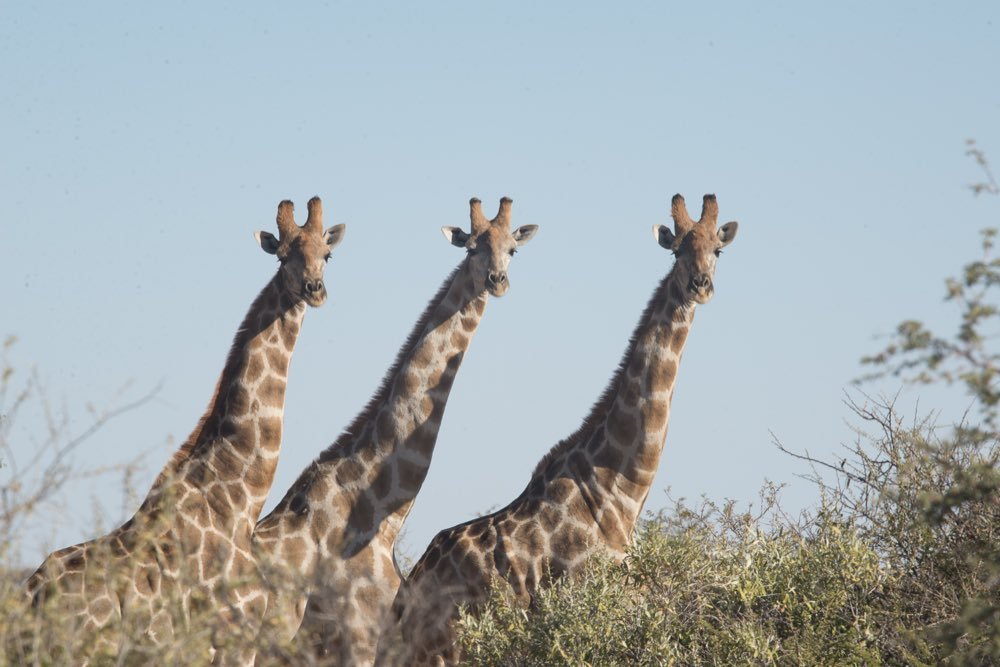
Giraffe, kudu and other antelope live on the farm. You meet them on the trails and they come closest to riders.
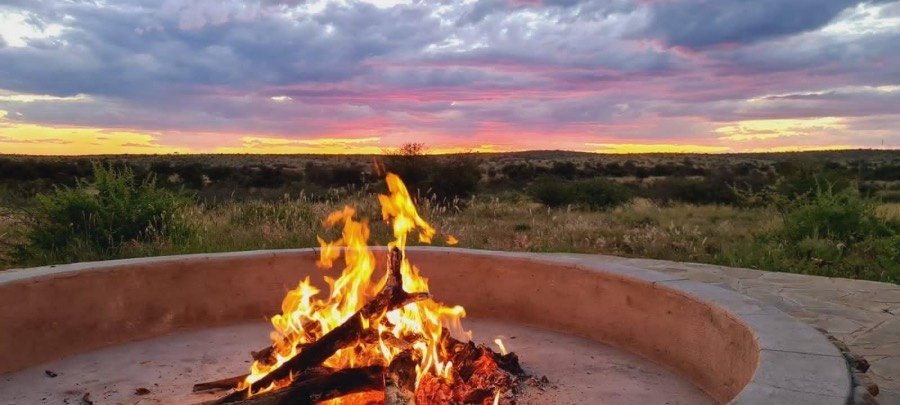
There is no light pollution and the highland air is clear. Stay at the fire after dark and look up.
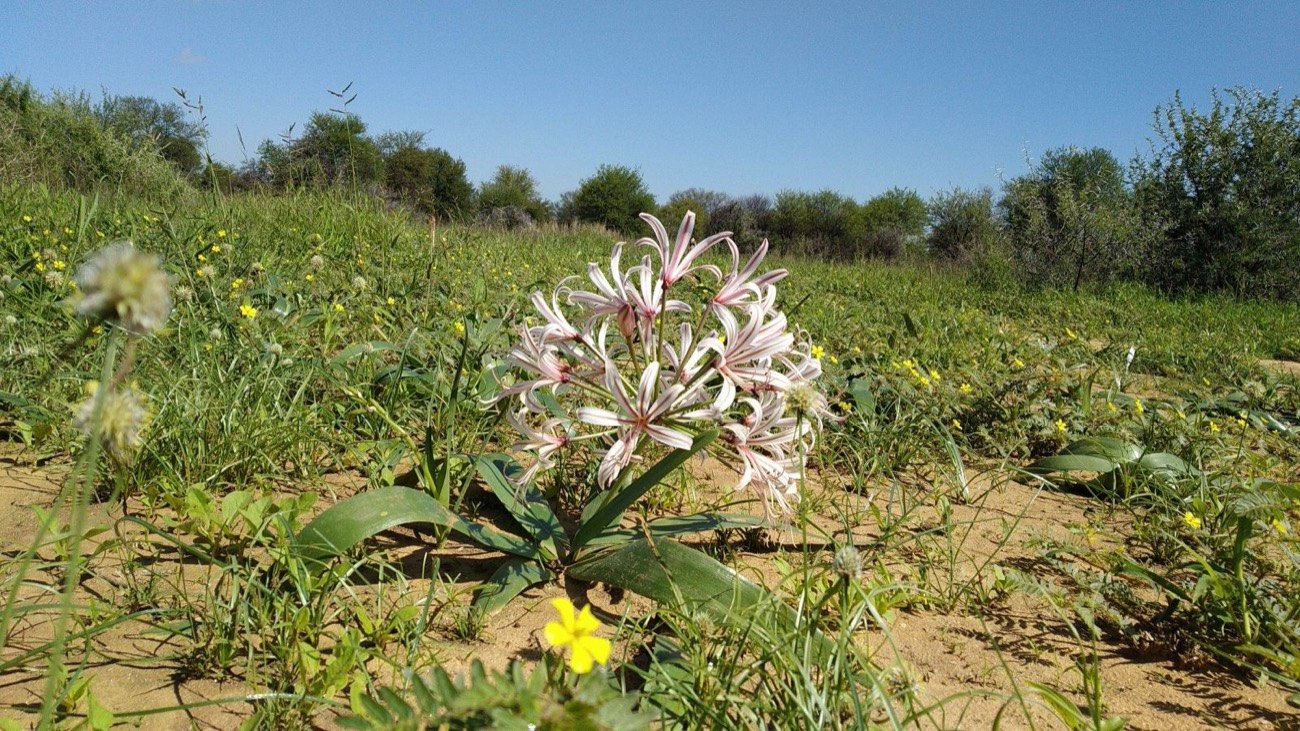
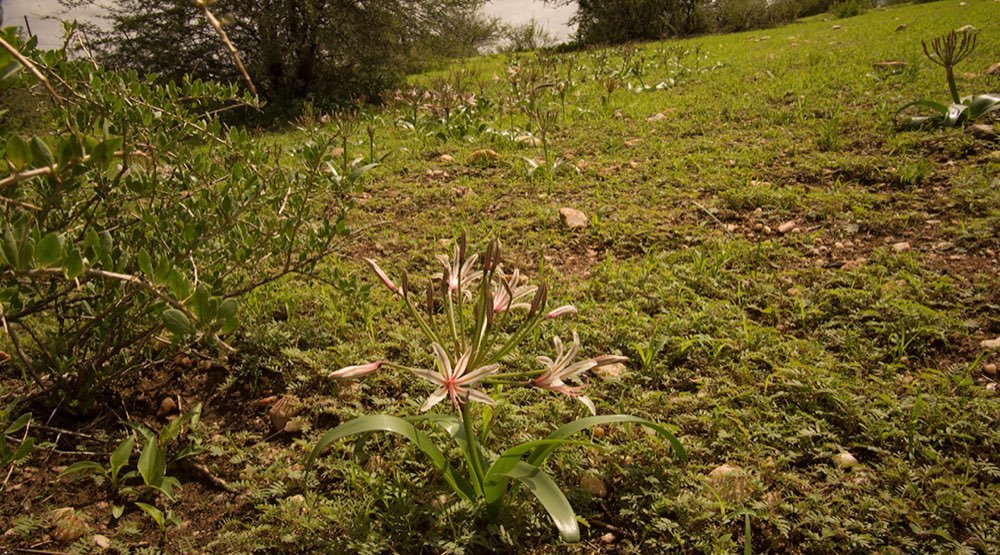
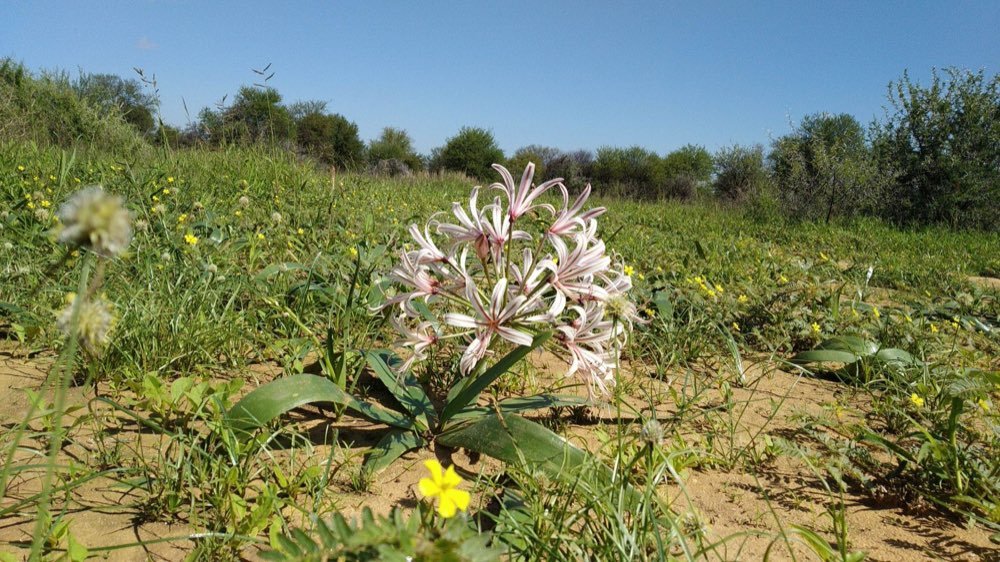
After good rain the lilies flower, usually early in the year. They do not last long, so come soon after the rain.
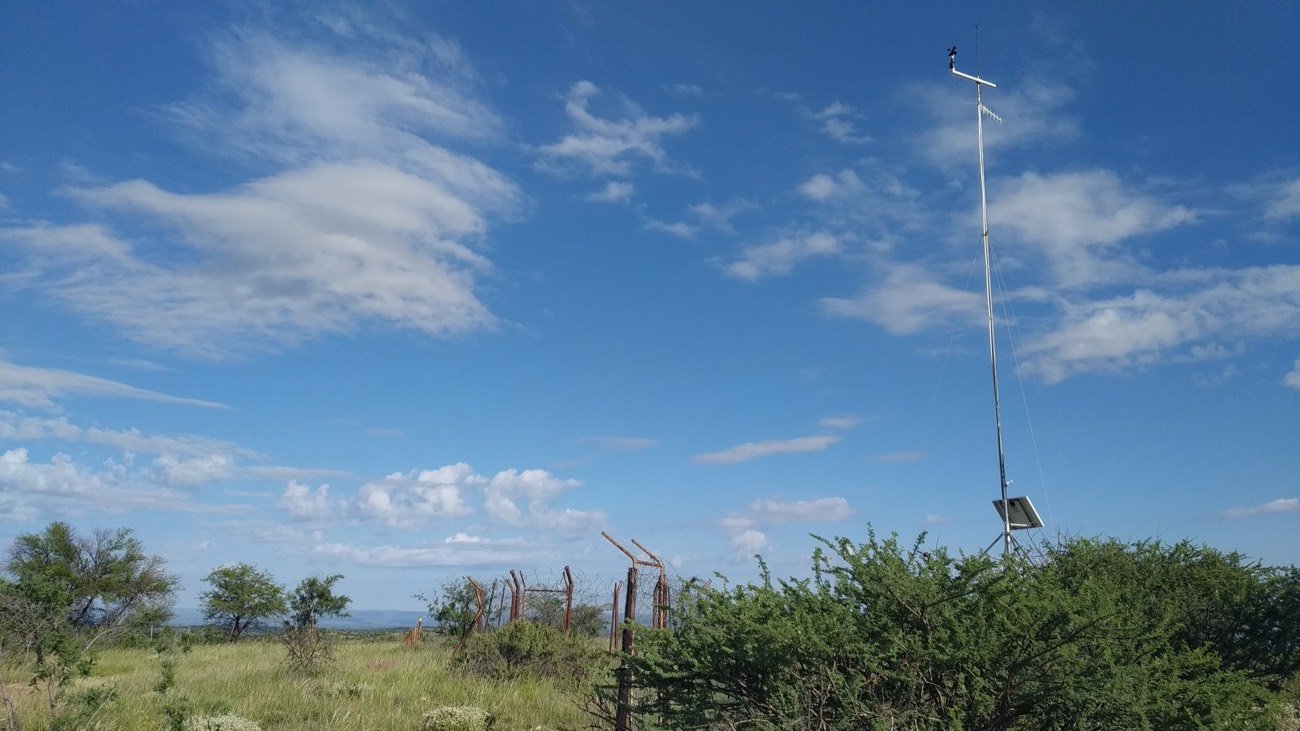
A SASSCAL WeatherNet station stands on Claratal. It records temperature, rain, UV index and wind, and you can look up today's readings or past records.
SASSCAL is the Southern African Science Service Centre for Climate Change and Adaptive Land Management. It runs 34 stations across Namibia.